Despite the earlier success of Pong Duck, the results other Asian Americans had with similar cases were often less positive. Racial segregation laws varied by state, and sometimes even by county. There seemed to be no concrete answer to the question of whether Asians should be separated into white or colored schools. Each case of Asian Americans pursuing a ‘white’ education was unique in its own sense, oftentimes contradicting each other. The most infamous of these battles would be the case of Lum vs. Rice.
Hinnershitz 71
“Pure” Chinese
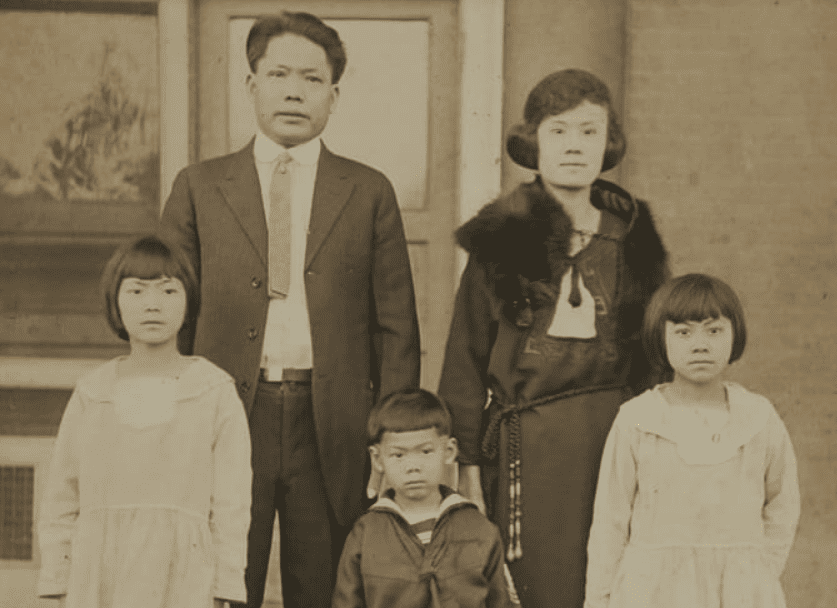
In September of 1924, the Lum daughters, Berda and her younger sister Martha, began their second year at Rosedale Consolidated High School, a white-only school in the Mississippi Delta. Midday, the girls were called to the office, where they were told they must return home and begin attending a colored school, as they were not white. Their father was astonished by this decision, emphasizing that his family was of Chinese descent, and insisting they were not colored. Lum’s attorneys argued that because the Lums were pure Chinese and Mississippi law did not mention Chinese citizens in their definition of colored, Martha was uncolored. There was a specific emphasis on the girl’s Chinese heritage, in an attempt to distance her from the judgments associated with classifications such as “Mongolian” or “yellow.”
Hinnershitz 72
“The complainant is a member of the Mongolian, or yellow race, and therefore, not entitled to attend the schools provided by the law in the state of Mississippi for the children of the white, or caucasian race.”
-E.C. Sharp, Assistant Attorney General of Mississippi (1925)
Hinnershitz 88
Gifted, Good, Clean, and Moral
A legal battle that lasted multiple years ensued. Gong Lum sought out an attorney, who advised that they specifically pursue Martha’s education in The Court, as she was the more “gifted” of the two. They also insisted that Martha was a “good, clean, moral girl” who was deserving of a quality education. There was also a great deal of importance placed on Gong Lum’s contribution to the local economy. He was framed as a productive member of society, and it was noted that as a taxpayer, his income directly supported Rosedale. Once again, there was no interest in challenging the status quo or providing equality for Asian Americans. Rather, the Lum family believed that their family should not be denied privileges granted to white citizens.
Hinnershitz 86
Their argument was successful, and Martha was permitted to attend the white school. It is important to note that although this was a win for the Lum family, it was not a triumph for Asian Americans as a whole, as many of the contributing factors in Martha’s decision had nothing to do with her race. Her father’s social currency, passive disposition, and economic influence had a far greater impact. However, the victory was short-lived, as an appeal to the case was made in response to growing concerns among white families in the school district, and Martha’s status as a student was revoked. Gong Lum continued to fight for his daughter’s education, but with little success. The Lum sisters spent the remainder of their schooling with private tutors instead of attending a colored school.
Hinnershitz 91
The Model Minority
This case is not only fascinating because of its fickleness, but also because it may be an explanation for the perception of Asian Americans still held by many in the South, and even the United States as a whole. The stereotypes of intelligence and docility are easily identifiable in this case. These qualities were likely associated with early Asian American students, as the only Asian children who were permitted to attend white schools had most, if not all, of these attributes. Only the gifted, good, clean, and moral Asian children were able to receive such an education. To fight such a ruling, one must have the freedom to afford an attorney in the first place.
The Perpetual Foreigner
There is a glaring topic of white proximity in modern conversations about Asian American culture, oftentimes accompanied by critiques of colorism and pandering towards white America. Gong Lum’s attitude and the strategies used by his attorneys show that these issues within the Asian community are not new. The notion that Asians in America are somehow “alien” or ‘un-American’ has deep roots in our legislature, which likely motivated many Asian immigrants to assimilate into American culture as seamlessly as possible. They saw a society built on racial binaries, and did not want to get caught on the losing end. Honoring heritage was less dire than making a life in America; thus, much was cast aside in hopes of appealing to the white majority, to be seen as adjacent to white culture. This logic of self-preservation is reminiscent of the type used by Lum during his trial, wherein he argued for the good of his daughter alone. Lum accepted the reality of racial discrimination, not his experience with it.